Aerospace
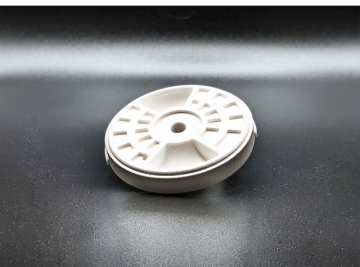
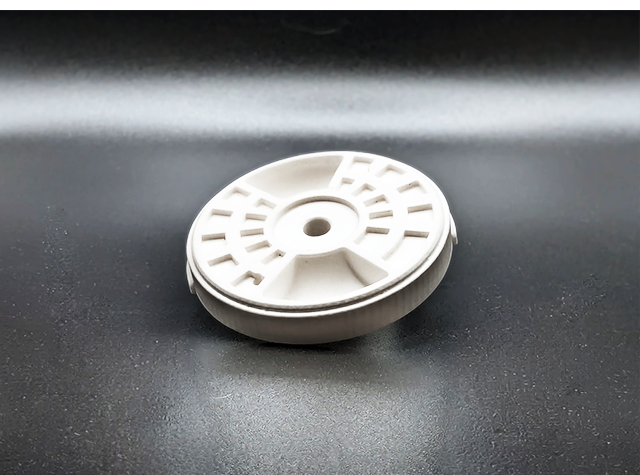
From extremely high temperatures to aggressive environments, ceramics rise to match the challenges of the aerospace industry. Alumina provides a good general purpose ceramic capable of withstanding harsh chemicals and temperatures as high as 1700-1800 degrees Celsius, while Zirconia parts provide increased toughness and thermal shock compatibility. For the most extreme situations, Aluminum Nitride and Silicon Nitride provide extreme thermal and mechanical resistance.
We can produce nose cones up to 10 inches in diameter, heat exchanger plates, leading edge protection plates, injector plates, and fuel manifolds with a high degree of accuracy. By printing parts, they not only can perform at the same level as conventional ceramics but can be designed to light weight the system and minimize the number of assembly steps with separate components.”
Specs
| C101 | C900 | Form 4 | |
|---|---|---|---|
| Material (all layer heights in µm) | |||
| Alumina | 50 / 100 | 100 | 50 |
| 3Y Zirconia | 50 / 100 | -- | 50¹ |
| 5Y | 50 / 100 | -- | -- |
| 8Y | 50 / 100 | -- | -- |
| Silica Core Material | 50 / 100 | -- | 50¹ |
| Aluminum Nitride | 50² | -- | -- |
| Silicon Nitride | 50² | -- | -- |
| Specs | |||
| Printer Volume³ | 100 x 100 x 150 mm | 300 x 300 x 100 mm | 200 x 125 x 210 mm |
| Printer Accuracy | ± 50 µm | ± 50 µm | ± 75 µm |
| Smallest Negative Feature | 500 µm | 500 µm | 600 µm |
| Smallest Positive Feature | 200 µm | 200 µm | 400 µm |
| Maximum Wall Thickness | 6 mm | 6 mm | 6 mm |
¹In development, coming soon
²Firing of nitrides is not currently available in the US and will need to be done at a different site. We expect this capability by early 2027 in the US.
³Keep in mind that all printer volumes are for the raw printer volume – parts typically shrink by 20-30%, so 100 mm may only be ~82 mm of sintered part
Materials
- Alumina (low purity – 97%)
- Alumina (high purity – 99.99%)
- 3Y Zirconia
- 5Y Zirconia
- Investment Casting Silica
- Alumina Toughened Zirconia (ATZ)
- Zirconia Toughened Alumina (ZTA)